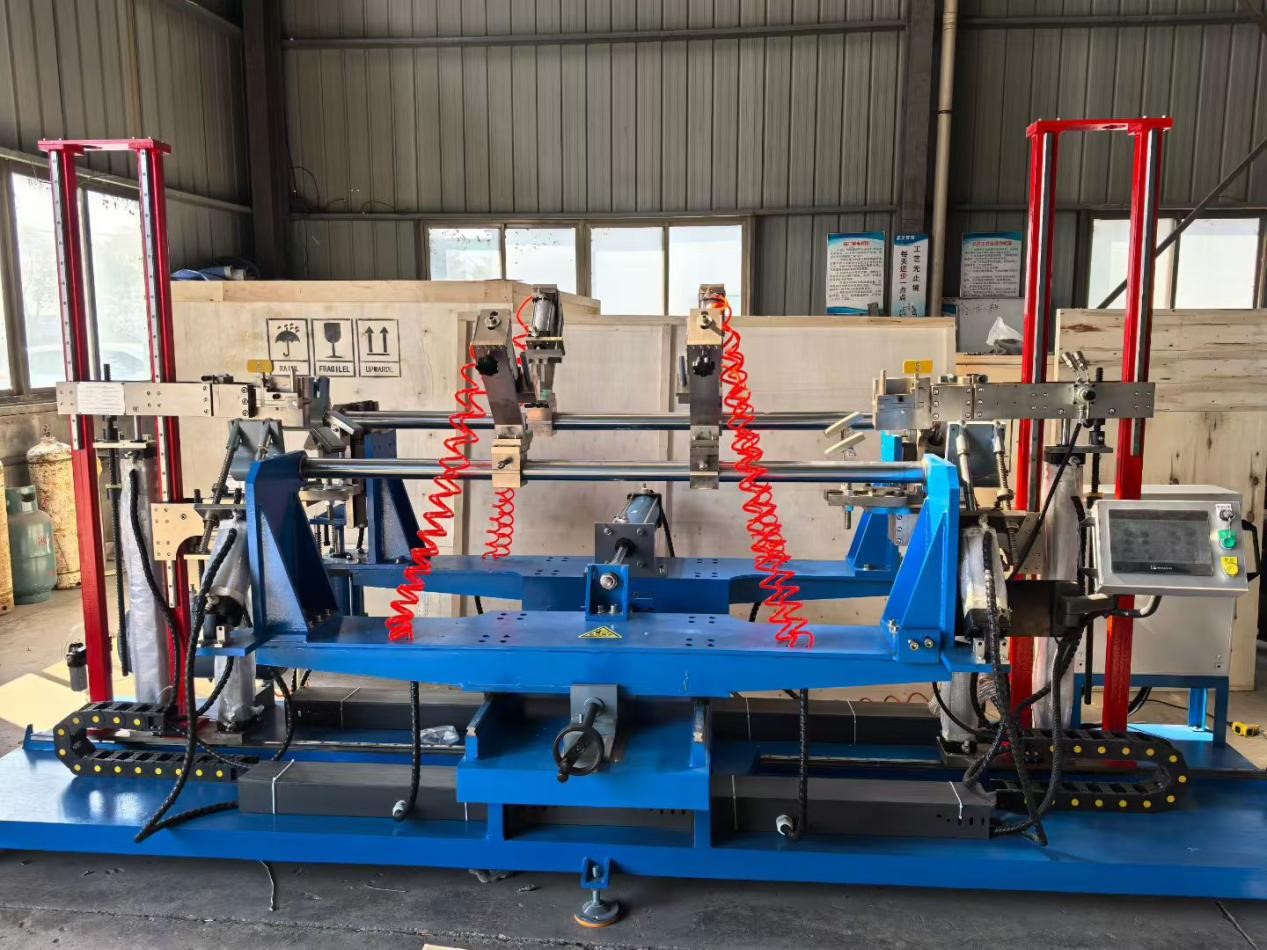
High voltage motors are built for applications where dependable and continuous mechanical power is essential. Large factories, processing plants, pumping stations, power facilities, mining operations, and other industrial environments often rely on these motors to keep important equipment operating. Unlike smaller motors used in everyday products, high voltage motors contain large electrical and mechanical components that must be manufactured and assembled with considerable care.
The quality of the manufacturing process has a direct effect on how a motor performs once it enters service. Winding accuracy, insulation quality, rotor balance, component alignment, and final testing all have to be properly controlled. This is why modern production facilities increasingly depend on specialised equipment rather than relying entirely on manual processes. A high voltage motor manufacturing machine can help manufacturers perform demanding operations with greater consistency while allowing production teams to monitor and control important process parameters.
Building a High Voltage Motor Starts With Accurate Components
Before a motor can be assembled, its individual components need to be manufactured to the appropriate specifications. The stator, rotor, shaft, housing, winding system, insulation components, bearings, and other parts all have specific dimensional and performance requirements. A problem with one component can create difficulties later in the assembly process, so quality control needs to begin early.
The stator core is one of the major components of the motor. It is normally constructed from thin laminated electrical steel sheets that are assembled to create the magnetic circuit. These laminations need to be handled and positioned carefully. Poor alignment or unsuitable assembly conditions can affect the finished motor’s magnetic performance and mechanical characteristics.
The rotor requires similar attention. Its shaft and rotating components must be manufactured accurately because the complete assembly needs to rotate smoothly. Machining equipment can help maintain consistent dimensions, while balancing systems can identify uneven weight distribution. Correct balancing becomes increasingly important as motor size and operating speed increase.
Winding production is another highly controlled operation. Coils must be formed according to the motor’s electrical design and positioned correctly within the stator. High voltage applications also require suitable insulation systems around the conductors. The manufacturing process therefore needs to control not only the shape and placement of the windings but also the application and condition of the insulation materials.
Where Manufacturing Machinery Makes a Difference
Modern motor factories use different types of specialised machinery for different stages of production. The objective is not simply to automate every operation, but to use equipment where controlled and repeatable processes can provide a practical advantage.
Winding machines are commonly used to produce coils with consistent dimensions and controlled conductor placement. Depending on the equipment, operators can set parameters such as winding speed, tension, turns, and positioning. Maintaining consistent settings can help reduce variation between coils produced for the same motor model.
Coil forming equipment can also be important for larger motors. After conductors have been wound, the coils may need to be shaped to fit accurately into the stator. Consistent forming helps ensure that the finished winding arrangement matches the intended design and leaves suitable space for insulation and other components.
Insulation machinery supports another critical part of the production process. High voltage windings require insulation capable of handling the electrical stresses associated with their operating conditions. Equipment used for insulation taping, wrapping, pressing, or curing can provide controlled and repeatable processing. Proper material handling is equally important because insulation materials can be affected by storage conditions, contamination, moisture, and incorrect processing temperatures.
For larger components, handling equipment can also improve workplace efficiency. High voltage motors can contain heavy parts that are difficult to move manually. Cranes, lifting systems, positioning equipment, and specialised assembly fixtures can help workers handle these components more safely and accurately.
A high voltage motor manufacturing machine may therefore form only one part of a larger production system. The greatest benefit often comes from integrating several machines and inspection stages into a clearly controlled workflow.
Automation Can Improve Repeatability Without Removing Human Expertise
Automation is increasingly used in industrial manufacturing because it can perform repetitive tasks with consistent operating parameters. In motor production, this can be useful for operations where small variations could accumulate over a large production run.
For example, a programmed machine can repeat a winding or forming process using the same basic settings for each component. This does not mean every component will automatically be perfect. Material differences, machine condition, tooling wear, and other factors can still affect the result. Regular inspection and calibration are therefore necessary.
Human expertise remains essential throughout the process. Engineers determine appropriate production parameters based on the motor design, while technicians monitor machinery and inspect components. Experienced workers can also recognise unusual sounds, vibrations, material behaviour, or visual defects that may not immediately appear in automated measurements.
The best manufacturing environments use automation as a support system rather than treating it as a complete replacement for technical knowledge. Machines provide repeatability and process control, while skilled employees provide judgement and problem-solving capabilities.
Testing Confirms Whether the Finished Motor Is Ready
No matter how advanced the manufacturing equipment is, finished motors still need appropriate inspection and testing. Testing provides evidence that the motor has been assembled correctly and that its electrical and mechanical systems behave as expected.
Electrical tests can include insulation resistance measurements, winding resistance checks, high voltage tests, and other procedures selected according to the motor design and applicable requirements. These tests can help identify issues within the winding or insulation system before the motor is placed into service.
Mechanical testing is also important. Engineers may monitor vibration, temperature, speed, noise, and other operating characteristics. Dynamic balancing can be checked to make sure the rotating assembly performs within the required limits.
Final dimensional inspection can confirm that critical components remain within their specified tolerances. This may include checking shaft dimensions, mounting points, alignment, and other mechanical characteristics. Keeping accurate inspection records can also help manufacturers identify recurring production issues.
Testing should not be treated as an isolated final step. Information gathered during inspection can be used to improve earlier manufacturing stages. If a particular defect repeatedly appears during final testing, engineers can investigate whether the problem originates from winding, machining, assembly, insulation processing, or another part of the production process.
Selecting the Right Equipment for Production Needs
Not every manufacturer needs the same type of machinery. A facility producing a small number of specialised motors may have different requirements from a factory producing large quantities of standardised industrial motors.
Production volume is one factor to consider. Higher volumes may justify greater automation because repetitive operations can be performed more efficiently. Manufacturers producing a wider range of motor designs may instead prioritise flexible equipment that can accommodate different component sizes and configurations.
Machine accuracy is another consideration. Equipment should be capable of achieving the tolerances required for the specific manufacturing operation. However, manufacturers should also consider reliability, maintenance requirements, spare parts availability, operator training, and technical support.
The physical layout of the factory matters as well. Large motor components require adequate space for storage, movement, assembly, and testing. Equipment should be positioned so that material can move logically through the production process without unnecessary handling.
What Modern Motor Manufacturing May Look Like
Industrial motor manufacturing is gradually becoming more connected and data-driven. Modern machinery can provide production information that helps engineers understand how equipment is performing. Sensors and digital control systems can monitor selected operating parameters and provide useful information for maintenance and quality management.
Predictive maintenance is one potential application. Instead of waiting for a machine component to fail, manufacturers can monitor equipment behaviour and schedule inspection or maintenance when indicators suggest increased wear. This approach can help reduce unexpected interruptions, although it depends on reliable monitoring systems and appropriate maintenance practices.
Machine vision and automated measurement may also become more common. These technologies can assist with identifying certain visual or dimensional defects, particularly when large numbers of similar components need to be inspected.
Despite these developments, the fundamental principles of motor manufacturing remain unchanged. Materials must be suitable, components must be accurately produced, assembly must follow the design, insulation must be properly managed, and finished motors must be tested carefully.
Conclusion
Reliable high voltage motors are the result of many controlled manufacturing steps rather than one individual machine or process. Accurate component production, careful winding, effective insulation, rotor balancing, precise assembly, and thorough testing all contribute to the finished product.
Modern machinery gives manufacturers better control over many of these operations. A high voltage motor manufacturing machine can support repeatable production, reduce unnecessary variation, and make demanding tasks easier to manage. However, machinery works most effectively when combined with experienced engineers, trained operators, regular maintenance, accurate measurement, and a well-organised quality control system.
As industrial requirements continue to evolve, manufacturers will need production methods that balance automation with practical engineering expertise. The focus should remain on producing motors that meet their specified electrical and mechanical requirements consistently, safely, and efficiently throughout their intended operating life.